
The development of antibiotic resistance has recently increased research attention in exploring novel antimicrobial agents sourced from medicinal plants. In Ethiopia, Allium sativum (garlic) and Zingiber officinale (ginger) are the most valued medicinal plants. This study investigates the antibacterial properties of extracts obtained from the bulbs and roots of Allium Sativum, Zingiber Officinale and their synergistic effects against Staphylococcus Aureus and Escherichia Coli strains isolated from milk samples. A 50g powdered bulbs of A. sativum and roots of Z. officinale were separately macerated with 500 mL of distilled water and 95% ethanol in sterilized flasks. The antibacterial effects of crude aqueous and hydro-ethanol extracts of the both plants and their synergistic effects with 95% ethanol extracts were assessed using disc diffusion method, with concentrations of 50, 75 and 100 mg/mL for susceptibility testing. The 95% ethanol extracts of both plants had lowest yield percentage as compared to aqueous extracts. ANOVA was used for statistical analysis, with a significance level of P <0.05. Both 95% ethanol as well as distilled water extracts and their synergistic effects with 95% ethanol extracts exhibited antibacterial activity against S. Aureus and E. Coli using ciprofloxacin discs as positive and blank discs as a negative control. Among the extracts, the lowest susceptibility was observed for aqueous extracts with inhibition zone of Z. officinale at 50 mg/mL against both bacteria, while E. coli showed a notable susceptibility to Z. officinale at 100 mg/mL. The 95% ethanol extract of A. sativum and its combination showed smaller inhibition zone against both bacteria at 50 mg/mL while, larger inhibition zone was seen with A. sativum against E. coli (27.67±0.58 mm) but Z. officinale showed larger inhibitory zone against S. aureus (19.33±1.15 mm) at concentration of 100 mg/mL compared to water extract. In both aqueous and 95% ethanol extracts, there was statistically a significant difference (P≤0.000) in the susceptibility of all tested bacteria. This study indicate that the extracts obtained from of the bulbs of A. sativum and the roots of Z. officinale have promising antibacterial properties, validating their traditional medicinal use for treating infections.
| Published in | Journal of Diseases and Medicinal Plants (Volume 12, Issue 1) |
| DOI | 10.11648/j.jdmp.20261201.14 |
| Page(s) | 57-69 |
| Creative Commons |
This is an Open Access article, distributed under the terms of the Creative Commons Attribution 4.0 International License (http://creativecommons.org/licenses/by/4.0/), which permits unrestricted use, distribution and reproduction in any medium or format, provided the original work is properly cited. |
| Copyright |
Copyright © The Author(s), 2026. Published by Science Publishing Group |
Antibacterial Activity, Allium Sativum, Escherichia Coli, Staphylococcus Aureus, Synergistic Effect, Zingiber Officinale
Scientific name | Common Name | Local Name | Parts Used |
|---|---|---|---|
Allium sativum | Garlic | Qullubii adii (A. O) Nechi shunkurt (A) | Bulbs |
Zingiber officinale roscoe | Ginger | Jinjibilla (A.O) Zinjibil(A) | Roots |
Extraction solvents | Raw plant powder (grams) | Extracted plant (grams) | Percentage Yield (%) |
|---|---|---|---|
Aqueous extracts of garlic | 50 | 14.2 | 28.4 |
95% extracts of garlic ethanol | 50 | 2.87 | 5.74 |
Aqueous extracts of ginger | 50 | 10.67 | 21.34 |
95% ethanol extracts of ginger | 50 | 3.92 | 7.84 |
Extracts solvents | Concentration (mg/mL) | Garlic (Allium sativum) | Ginger (Zinger officinale) | ||
|---|---|---|---|---|---|
Zone of inhibition (mm) | Zone of inhibition (mm) | ||||
S.aureus | E. coli | S.aureus | E. coli | ||
Aqueous | 50 | 6.33±1.15a | 7.67±0.58a | 6.00±1.00a | 6.00±0.58a |
75 | 7.67±0.58a | 8.67±0.58a | 7.67±0.58a | 7.67±0.58a | |
100 | 9.00±1.00a | 11.67±0.58a | 10.00±1.00a | 9.00±1.00a | |
95% Ethanol | 50 | 10.00±1.00a | 9.33±0.58a | 10.33±0.58a | 9.67±0.58a |
75 | 11.33±0.58a | 12.67±0.58a | 14.67±o.58a | 12.67±0.58a | |
100 | 15.67±0.58a | 27.67±0.58a | 19.33±1.15a | 15.33±0.58a | |
Positive control | 11.22±0.50b | 10.78±0.50b | 11.22±0.50b | 10.78±2.50b | |
Negative control | 0.00±0.00c | 0.00±0.00 c | 0.00±0.00 c | 0.00±0.00 c | |
Extracts solvents | Concentration (mg/mL) | Zone of inhibition (mm) | |
|---|---|---|---|
S. aureus | E. coli | ||
95% Ethanol | 50 | 9.67±0.58a | 10.00±1.00a |
75 | 12.33±0.58a | 12.67±0.58a | |
100 | 16.00±1.00a | 14.67±0.58a | |
Positive control | 11.22±0.44b | 10.78±0.44b | |
Negative control | 0.00±0.00 c | 0.00±0.00 c | |
zone of inhibition Result | |||||
|---|---|---|---|---|---|
Sum of Squares | df | Mean Square | F | Significance | |
ANOVA table type of extract against E. coli | |||||
Between Groups | 452.611 | 5 | 90.52 | 6.37 | 0.000 |
Within Groups | 682.222 | 48 | 14.21 | ||
Total | 1134.833 | 53 | |||
ANOVA table effect of concentrations against E. coli | |||||
Between groups | 1118.167 | 17 | 65.78 | 142.07 | 0.000 |
Within groups | 16.667 | 36 | .463 | ||
Total | 1134.833 | 53 | |||
ANOVA table effect of type of extracts on S. aureus | |||||
Between groups | 351.778 | 5 | 70.36 | 11.25 | 0.000 |
Within groups | 300.222 | 48 | 6.26 | ||
Total | 652.000 | 53 | |||
ANOVA table effect of concentrations of extracts on S. aureus | |||||
Between groups | 632.000 | 17 | 37.18 | 66.92 | 0.000 |
Within groups | 20.000 | 36 | .56 | ||
Total | 652.000 | 53 | |||
CMT | California Mastitis Test |
ANOVA | Analysis of Variance |
DMSO | Dimethyl Sulfoxide |
MSA | Mannitol Salt Agar |
WHO | World Health Organization |
SPSS | Statistical Package for the Social Sciences |
| [1] | Jamshidi-Kia, F., Lorigooini, Z., & Amini-Khoei, H. Medicinal plants: Past history and future perspective. Journal of herbmed pharmacology, 2018, 7, 1-7. |
| [2] | Yadufashije C, Niyonkuru A, Munyeshyaka E, Madjidi S, Mucumbitsi J. Antibacterial activity of ginger extracts on bacteria isolated from digestive tract infection patients attended Muhoza Health Center. Asian journal of medical sciences. 2020, 11, 35-41. |
| [3] | Megersa, M., Asfaw, Z., Kelbessa, E. et al. An ethnobotanical study of medicinal plants in Wayu Tuka District, East Welega Zone of Oromia Regional State, West Ethiopia. J Ethnobiology Ethnomedicine.2013, 9, 68. |
| [4] | Imo C, Za’aku JS. Medicinal properties of ginger and garlic: A review. Curr. Trends Biomed. Eng. Biosci. 2019, 18, 47-52. |
| [5] | Egharevba HO, Kunle FO. Preliminary phytochemical and proximate analysis of the leaves of Piliostigma thonningii (Schumach.) Milne-Redhead. Ethnobotanical leaflets. 2010, 2. |
| [6] | Amenu E. Use and management of medicinal plants by indigenous people of Ejaji area (Chelya woreda) West Shoa, Ethopia: An Ethnobotanical Approach A Thesis submitted to the school of graduate studies, Addis Ababan, Ethiopia. 2007, 104. |
| [7] | Tepe B, Daferera D, Sökmen M, Polissiou M, Sökmen A. In vitro antimicrobial and antioxidant activities of the essential oils and various extracts of Thymus eigii M. Zohary et PH Davis. Journal of agricultural and food chemistry. 2004, 52, 1132-7. |
| [8] | Seifu T, Asres K, Gebre-Mariam T. Ethnobotanical and ethnopharmaceutical studies on medicinal plants of Chifra district, Afar region, North Eastern Ethiopia. Ethiop Pharm J. 2004, 24, 41-58. |
| [9] | Giday M, Asfaw Z, Elmqvist T, Woldu Z. An ethnobotanical study of medicinal plants used by the Zay people in Ethiopia. Journal of ethnopharmacology. 2003, 85, 43-52. |
| [10] | Suleman S, Alemu T. A survey on utilization of ethnomedicinal plants in Nekemte town, East Wellega (Oromia), Ethiopia. Journal of herbs, spices & medicinal plants. 2012, 18, 34-57. |
| [11] | Edwards S, Demissew S, Heberg I. Flora of Ethiopia and Eritrea, The National Herbarium.1997. |
| [12] | Jadon R, Dixit S. Phytochemical extraction and antimicrobial activity of some medicinal plants on different microbial strains. Journal of Medicinal Plants Studies. 2014, 2, 58-63. |
| [13] | Eshetu GR, Dejene TA, Telila LB, Bekele DF. Ethnoveterinary medicinal plants: preparation and application methods by traditional healers in selected districts of southern Ethiopia. Veterinary world. 2015, 8, 674. |
| [14] | Gadisa E, Weldearegay G, Desta K, Tsegaye G, Hailu S, Jote K, Takele A. Combined antibacterial effect of essential oils from three most commonly used Ethiopian traditional medicinal plants on multidrug resistant bacteria. BMC Complementary and Alternative Medicine. 2019, 19, 1-9. |
| [15] | Abera B. Medicinal plants used in traditional medicine in Jimma Zone, Southwest Ethiopia. Ethiopian Journal of Health Sciences. 2003, 13, 85-94. |
| [16] | Gabriel T, Guji T. Ethno pharmacological survey of medicinal plants in Agaro district, Jimma zone, South West Ethiopia. International Journal of Pharmaceutical Sciences and Research. 2014, 5, 3551. |
| [17] | Cardelle-Cobas A, Soria AC, Corzo N, Villamiel M. A comprehensive survey of garlic functionality.2010. |
| [18] | Karuppiah P, Rajaram S. Antibacterial effect of Allium sativum cloves and Zingiber officinale rhizomes against multiple-drug resistant clinical pathogens. Asian Pacific journal of tropical biomedicine. 2012, 2, 597-601. |
| [19] | Shobana S, Vidhya VG, Ramya M. Antibacterial activity of garlic varieties (ophioscordon and sativum) on enteric pathogens. Current Research Journal of Biological Sciences. 2009, 1, 123-6. |
| [20] | Aliyu, A. M., Suleman, S. S., and Aliyu, M. Y. Synergistic Effect of Allium sativum (garlic) and Zingiber officinale (ginger) against Escherichia coli and staphylococcus aureus. International Journal of Scientific and Engineering Research.2015, 6, 1351- 1353. |
| [21] | Agize M, Zouwen L. Spice and medicinal plants production and value chain analysis from South-West Ethiopia. Journal of Pharmacy and Alternative Medicine. 2016, 10, 126-44. |
| [22] | Seema R. Evaluation of synergistic effect of ginger, garlic, turmeric extraction on the antimicrobial activity of drugs against bacterial pathogens. International Journal of Biopharmaceutics. 2015, 6, 60-5. |
| [23] | Kizhakkayil J, Sasikumar B. Diversity, characterization and utilization of ginger: a review. Plant Genetic Resources. 2011, 9, 464-77. |
| [24] | Mostafa MS, Luluah MR, Samer AH, Alaa AO. Comparative laboratory study on antimicrobial effects of fresh and dry ginger (Zingiberofficinale), Taif, KSA. Journal of Environmental Science, Toxicology and Food Technology. 2014, 8, 114-23. |
| [25] | Regasa B. Aetiology of bacterial pathogens from adult patients with community-acquired pneumonia in Arba Minch hospital, South Ethiopia. Science. 2014, 3, 33-6. |
| [26] | Avato P, Tursi F, Vitali C, Miccolis V, Candido V. Allylsulfide constituents of garlic volatile oil as antimicrobial agents. Phytomedicine. 2000, 7, 239-43. |
| [27] | Chisom IF, Okereke C, Okeke C. Comparative phytochemical and proximate analyses on Ceiba pentandra (L) Gaertn. and Bombax buonopozense (P) Beauv. International Journal of Herbal Medicine. 2014, 2, 162-7. |
| [28] | Wardhani GA, Azizah M, Hastuti LT. Nilai Total Flavonoid dalam Black Garlic (Allium sativum L.) Berdasarkan Fraksi Pelarut dan Aktivitas Antioksidan Value of Total Flavonoids in Black Garlic (Allium sativum L.) Based on The Solvent Fraction and Antioxidant Activity. Jurnal Agroindustri Halal. 2020, 6, 20-7. |
| [29] | Sagdic O. Sensitivity of four pathogenic bacteria to Turkish thyme and oregano hydrosols. LWT Food Sci Technol.2003, 36, 467–473. |
| [30] |
WHO. Antimicrobial resistance (AMR). Availabileonline:
https://www.who.int/medicines/publication/traditional/trm strategy 143/en/accessed, April, 2020 |
| [31] | Kala C, Ali SS, Chaudhary S. Comparative pharmacognostical evaluation of Costus speciosus (Wild Ginger) and Zingiber officinale (Ginger) rhizome. Int J Curr Pharm Res. 2016, 8, 19-23. |
| [32] | Hammerum AM, Heuer OE. Human health hazards from antimicrobial-resistant Escherichia coli of animal origin. Clinical infectious diseases. 2009, 48, 916-21. |
| [33] | Verraes C, Van Boxstael S, Van Meervenne E, Van Coillie E, Butaye P, Catry B, De Schaetzen MA, Van Huffel X, Imberechts H, Dierick K, Daube G. Antimicrobial resistance in the food chain: a review. International journal of environmental research and public health. 2013, 10, 2643-69. |
| [34] | Tolosa T, Verbeke J, Piepers S, Supré K, De Vliegher S. Risk factors associated with subclinical mastitis as detected by California Mastitis Test in smallholder dairy farms in Jimma, Ethiopia using multilevel modelling. Preventive Veterinary Medicine. 2013, 11, 68-75. |
| [35] | Tegegne A, Feye G. Study of Selected Livestock Innovations in Ethiopia. zef Center for Development Research University of Bonn, Working Paper. 2020 16-192. |
| [36] | Mukhtar S, Ghori I. Antibacterial activity of aqueous and ethanolic extracts of garlic, cinnamon and turmeric against Escherichia coli ATCC 25922 and Bacillus subtilis DSM 3256. International Journal of applied biology and pharmaceutical Technology. 2012, 3, 131-6. |
| [37] | Biswas B, Rogers K, McLaughlin F, Daniels D, Yadav A. Antimicrobial Activities of Leaf Extracts of Guava (Psidium guajava L.) on Two Gram-Negative and Gram-Positive Bacteria. Int J Microbiol. 2013, 746165. |
| [38] | Viviyan S, Niranjan K, Tharmila S, Christy Jeyaseelan E. Antibacterial activity of various solvent extracts of some selected medicinal plants present in Jaffna Peninsula. International Journal of Pharmacetucal and BiologicalArchives.2012, 3, 782-796. |
| [39] | Pandey AK, Chawdhry PK. Propagation techniques and harvesting time on productivity and root quality of Withania somnifera. Journal of Tropical Medicinal Plants. 2006, 7, 79. |
| [40] | Quinn PJ. Clinical veterinary microbiology. 1994. |
| [41] | Merchand IA, Packer RA. Veterinary bacteriology and virology. Veterinary bacteriology and virology. 1967. |
| [42] | Jahan M, Rahman M, Parvej MS, Chowdhury SM, Haque E, Talukder MA, Ahmed S.Isolation and characterization of Staphylococcus aureus from raw cow milk in Bangladesh. Journal of Advanced Veterinary and Animal Research.2015, 2, 49-55. |
| [43] | MacConkey AT. Bile salt media and their advantages in some bacteriological examinations. Epidemiology & Infection. 1908, 8, 322-34. |
| [44] | Gershwin LJ. The physiochemical and biological basis of immunity. Review of Veterinary Microbiology. Blackwell Scientific Publications, Boston, USA. 1990, 29-30. |
| [45] | Koneman EW, Allen SD, Janda WM, Schreckenberger PC, Winn WC. Diagnostic microbiology. The nonfermentative gram-negative bacilli. Philedelphia: Lippincott-Raven Publishers. 1997, 253-320. |
| [46] | Chadwick P, Delisle GJ, Byer M. Biochemical identification of hospital enterobacteria by replica agar plating. Canadian Journal of Microbiology. 1974, 20, 1653-64. |
| [47] | Ullah O, Khattak M, Hasan F, Raja N, Hussain S, Akhtar N, Shah AA. Vancomycin Resistant Enterococcal Infections in Tertiary Care Hospitals of Islamabad and Rawalpindi, Pakistan. Pakistan Journal of Zoology. 2015, 47. |
| [48] | Vineetha N, Vignesh RA, Sridhar D. Preparation, standardization of antibiotic discs and study of resistance pattern for first-line antibiotics in isolates from clinical samples. International Journal of Applied Research. 2015, 1, 624-31. |
| [49] | Handa SS. An overview of extraction techniques for medicinal and aromatic plants. Extraction technologies for medicinal and aromatic plants. 2008, 1, 21-40. |
| [50] | Kirby WM, Bauer AW. Antimicrobial sensitivity testing by agar diffusion method. Am.J. Clin Pathol. 1996, 44, 485-93. |
| [51] | National Committee for clinical Laboratory Standards. Method for dilution antimicrobial susceptibility test of bacteria that grow aerobically. 4th Edition, National Committee for Clinical Laboratory Standards, M7-A4. Waynae.1998. |
| [52] | Yusha’u M, Umar MI, Suleiman K. Indigenous commercial drinks as potential sources of extended spectrum β-lactamases (ESBLS) producing organisms in Kano, Nigeria. International Journal of Biomedical and Health Sciences. 2021, 4, 6. |
| [53] | Aboaba OO, Efuwape BM. Antibacterial properties of some Nigerian species. Bio Res Comm. 2001, 13, 183-8. |
| [54] | Wolde T, Kuma H, Trueha K, Yabeker A. Anti-bacterial activity of garlic extract against human pathogenic bacteria. J Pharmacovigil. 2018, 6, 1-5. |
| [55] | Mostafa AA, Al-Askar AA, Almaary KS, Dawoud TM, Sholkamy EN, Bakri MM. Antimicrobial activity of some plant extracts against bacterial strains causing food poisoning diseases. Saudi journal of biological sciences. 2018, 25, 361-6. |
| [56] | Yassen D, Ibrahim AE. Antibacterial activity of crude extracts of ginger (Zingiber officinale Roscoe) on Escherichia coli and Staphylococcus aureus: A Study in vitro. Indo American Journal of Pharmaceutical Research. 2016, 6, 5830-35. |
| [57] | Chakraborty B, Nath A, Saikia H, Sengupta M. Bactericidal activity of selected medicinal plants against multidrug resistant bacterial strains from clinical isolates. Asian Pacific Journal of Tropical Medicine. 2014, 7, S435-41. |
| [58] | Nejad AS, Shabani S, Bayat M, Hosseini SE. Antibacterial effect of garlic aqueous extract on Staphylococcus aureus in hamburger. Jundishapur journal of microbiology. 2014 Nov, 7. |
| [59] | Sikrodia R, Chhabra D, Audarya SD, Sharda R. Efficacy of antimicrobial activity of aqueous extract of garlic (Allium sativum) and ginger (Zingiber officinale) against different bacterial species. Int. J. Curr. Microbiol. App. Sci. 2018, 7, 3021-5. |
| [60] | Onyeagba RA, Ugbogu OC, Okeke CU, Iroakasi O. Studies on the antimicrobial effects of garlic (Allium sativum Linn), ginger (Zingiber officinale Roscoe) and lime (Citrus aurantifolia Linn). African journal of Biotechnology. 2004, 3, 552-4. |
| [61] | Doughari JH, Manzara S. In vitro antibacterial activity of crude leaf extracts of Mangifera indica Linn. Afr J Microbiol Res. 2008 Apr 1, 2, 67-72. |
| [62] | Nalubega R, Kabasa JD, Olila D, Kateregga J. Evaluation of antibacterial activity of selected ethnomedicinal plants for poultry in Masaka district, Uganda. Research Journal of Pharmacology. 2011, 5, 18-21. |
| [63] | Shan B, Cai YZ, Brooks JD, Corke H. The in vitro antibacterial activity of dietary spice and medicinal herb extracts. International Journal of food microbiology. 2007, 117, 112-9. |
| [64] | Abbas M, Saeed F, Anjum FM, Afzaal M, Tufail T, Bashir MS, Ishtiaq A, Hussain S, Suleria HA. Natural polyphenols: An overview. International Journal of Food Properties. 2017, 20, 1689-99. |
APA Style
Gemeda, E., Hamba, N., Keno, M., Begna, F. (2026). Antibacterial Activity of Allium Sativum, Zingiber Officinale and Their Synergistic Effect Against Staphylococcus Aureus and Escherichia Coli Isolated from Milk Samples of a Dairy Farm in Jimma Town Southwestern Ethiopia. Journal of Diseases and Medicinal Plants, 12(1), 57-69. https://doi.org/10.11648/j.jdmp.20261201.14
ACS Style
Gemeda, E.; Hamba, N.; Keno, M.; Begna, F. Antibacterial Activity of Allium Sativum, Zingiber Officinale and Their Synergistic Effect Against Staphylococcus Aureus and Escherichia Coli Isolated from Milk Samples of a Dairy Farm in Jimma Town Southwestern Ethiopia. J. Dis. Med. Plants 2026, 12(1), 57-69. doi: 10.11648/j.jdmp.20261201.14
AMA Style
Gemeda E, Hamba N, Keno M, Begna F. Antibacterial Activity of Allium Sativum, Zingiber Officinale and Their Synergistic Effect Against Staphylococcus Aureus and Escherichia Coli Isolated from Milk Samples of a Dairy Farm in Jimma Town Southwestern Ethiopia. J Dis Med Plants. 2026;12(1):57-69. doi: 10.11648/j.jdmp.20261201.14
@article{10.11648/j.jdmp.20261201.14,
  author = {Etu Gemeda and Niguse Hamba and Melaku Keno and Feyisa Begna},
  title = {Antibacterial Activity of Allium Sativum, Zingiber Officinale and Their Synergistic Effect Against Staphylococcus Aureus and Escherichia Coli Isolated from Milk Samples of a Dairy Farm in Jimma Town Southwestern Ethiopia},
  journal = {Journal of Diseases and Medicinal Plants},
  volume = {12},
  number = {1},
  pages = {57-69},
  doi = {10.11648/j.jdmp.20261201.14},
  url = {https://doi.org/10.11648/j.jdmp.20261201.14},
  eprint = {https://article.sciencepublishinggroup.com/pdf/10.11648.j.jdmp.20261201.14},
  abstract = {The development of antibiotic resistance has recently increased research attention in exploring novel antimicrobial agents sourced from medicinal plants. In Ethiopia, Allium sativum (garlic) and Zingiber officinale (ginger) are the most valued medicinal plants. This study investigates the antibacterial properties of extracts obtained from the bulbs and roots of Allium Sativum, Zingiber Officinale and their synergistic effects against Staphylococcus Aureus and Escherichia Coli strains isolated from milk samples. A 50g powdered bulbs of A. sativum and roots of Z. officinale were separately macerated with 500 mL of distilled water and 95% ethanol in sterilized flasks. The antibacterial effects of crude aqueous and hydro-ethanol extracts of the both plants and their synergistic effects with 95% ethanol extracts were assessed using disc diffusion method, with concentrations of 50, 75 and 100 mg/mL for susceptibility testing. The 95% ethanol extracts of both plants had lowest yield percentage as compared to aqueous extracts. ANOVA was used for statistical analysis, with a significance level of P S. Aureus and E. Coli using ciprofloxacin discs as positive and blank discs as a negative control. Among the extracts, the lowest susceptibility was observed for aqueous extracts with inhibition zone of Z. officinale at 50 mg/mL against both bacteria, while E. coli showed a notable susceptibility to Z. officinale at 100 mg/mL. The 95% ethanol extract of A. sativum and its combination showed smaller inhibition zone against both bacteria at 50 mg/mL while, larger inhibition zone was seen with A. sativum against E. coli (27.67±0.58 mm) but Z. officinale showed larger inhibitory zone against S. aureus (19.33±1.15 mm) at concentration of 100 mg/mL compared to water extract. In both aqueous and 95% ethanol extracts, there was statistically a significant difference (P≤0.000) in the susceptibility of all tested bacteria. This study indicate that the extracts obtained from of the bulbs of A. sativum and the roots of Z. officinale have promising antibacterial properties, validating their traditional medicinal use for treating infections.},
 year = {2026}
}
TY  - JOUR
T1  - Antibacterial Activity of Allium Sativum, Zingiber Officinale and Their Synergistic Effect Against Staphylococcus Aureus and Escherichia Coli Isolated from Milk Samples of a Dairy Farm in Jimma Town Southwestern Ethiopia
AU  - Etu Gemeda
AU  - Niguse Hamba
AU  - Melaku Keno
AU  - Feyisa Begna
Y1  - 2026/03/12
PY  - 2026
N1  - https://doi.org/10.11648/j.jdmp.20261201.14
DO  - 10.11648/j.jdmp.20261201.14
T2  - Journal of Diseases and Medicinal Plants
JF  - Journal of Diseases and Medicinal Plants
JO  - Journal of Diseases and Medicinal Plants
SP  - 57
EP  - 69
PB  - Science Publishing Group
SN  - 2469-8210
UR  - https://doi.org/10.11648/j.jdmp.20261201.14
AB  - The development of antibiotic resistance has recently increased research attention in exploring novel antimicrobial agents sourced from medicinal plants. In Ethiopia, Allium sativum (garlic) and Zingiber officinale (ginger) are the most valued medicinal plants. This study investigates the antibacterial properties of extracts obtained from the bulbs and roots of Allium Sativum, Zingiber Officinale and their synergistic effects against Staphylococcus Aureus and Escherichia Coli strains isolated from milk samples. A 50g powdered bulbs of A. sativum and roots of Z. officinale were separately macerated with 500 mL of distilled water and 95% ethanol in sterilized flasks. The antibacterial effects of crude aqueous and hydro-ethanol extracts of the both plants and their synergistic effects with 95% ethanol extracts were assessed using disc diffusion method, with concentrations of 50, 75 and 100 mg/mL for susceptibility testing. The 95% ethanol extracts of both plants had lowest yield percentage as compared to aqueous extracts. ANOVA was used for statistical analysis, with a significance level of P S. Aureus and E. Coli using ciprofloxacin discs as positive and blank discs as a negative control. Among the extracts, the lowest susceptibility was observed for aqueous extracts with inhibition zone of Z. officinale at 50 mg/mL against both bacteria, while E. coli showed a notable susceptibility to Z. officinale at 100 mg/mL. The 95% ethanol extract of A. sativum and its combination showed smaller inhibition zone against both bacteria at 50 mg/mL while, larger inhibition zone was seen with A. sativum against E. coli (27.67±0.58 mm) but Z. officinale showed larger inhibitory zone against S. aureus (19.33±1.15 mm) at concentration of 100 mg/mL compared to water extract. In both aqueous and 95% ethanol extracts, there was statistically a significant difference (P≤0.000) in the susceptibility of all tested bacteria. This study indicate that the extracts obtained from of the bulbs of A. sativum and the roots of Z. officinale have promising antibacterial properties, validating their traditional medicinal use for treating infections.
VL  - 12
IS  - 1
ER  -
School of Veterinary Medicine, Jimma University, Jimma, Ethiopia
Department of Biomedical Sciences, Jimma University Institute of Health, Jimma, Ethiopia
School of Veterinary Medicine, Jimma University, Jimma, Ethiopia
School of Veterinary Medicine, Jimma University, Jimma, Ethiopia
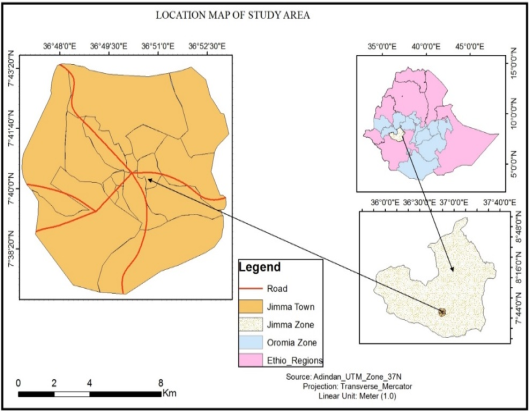
Figure 1. Jimma town administrative boundary (source: Ethio GIS, 2014).
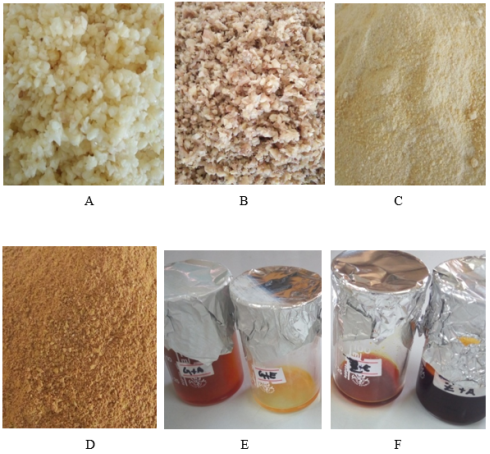
Figure 2. Chopped roots of Allium sativum (garlic) and Zingiber officinale (ginger) (A and B); fine powder (C and D); and crude filtered extract (E and F); the left pictures shows the roots of garlic and the right picture shows bulbs of ginger.
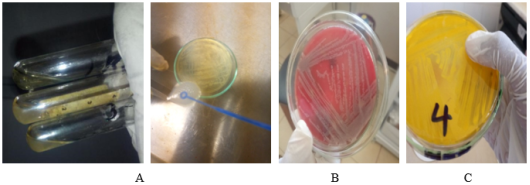
Figure 3. Tube coagulase positive S. aureus (A); beta hemolytic S. aureus colony on 7% sheep blood agar (B); and golden yellow S. aureus colony on mannitol salt agar (C).
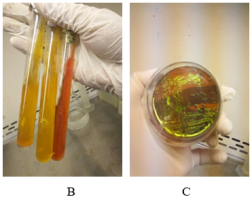
Figure 4. The yellow slant and butt with splitting of the agar by gas formation in the TSI tube (B), and blue black metallic sheen colonies of E. coli growing on eosin methylene blue agar (C).
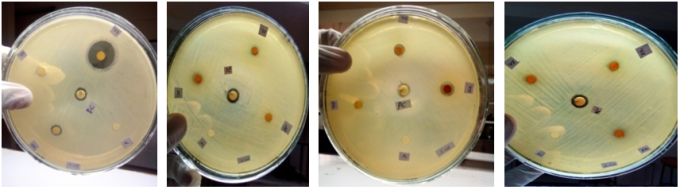
Figure 5. Antibacterial effects of study plants at different concentration.
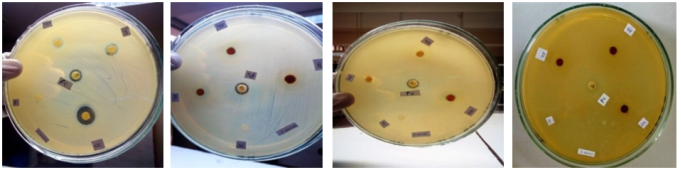
Figure 6. Antibacterial effects of study plants at different concentration for identifying good efficacy.
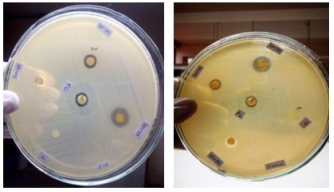
Figure 7. synergetic effects of antibacterial of study plants.




 Share This Article
 Twitter
 Linked In
 Facebook
 Copy
Copy Download